Secure your website from today's biggest threats, and automatically stay ahead of tomorrow's. Effortless, continuous vulnerability scanning that prevents downtime.
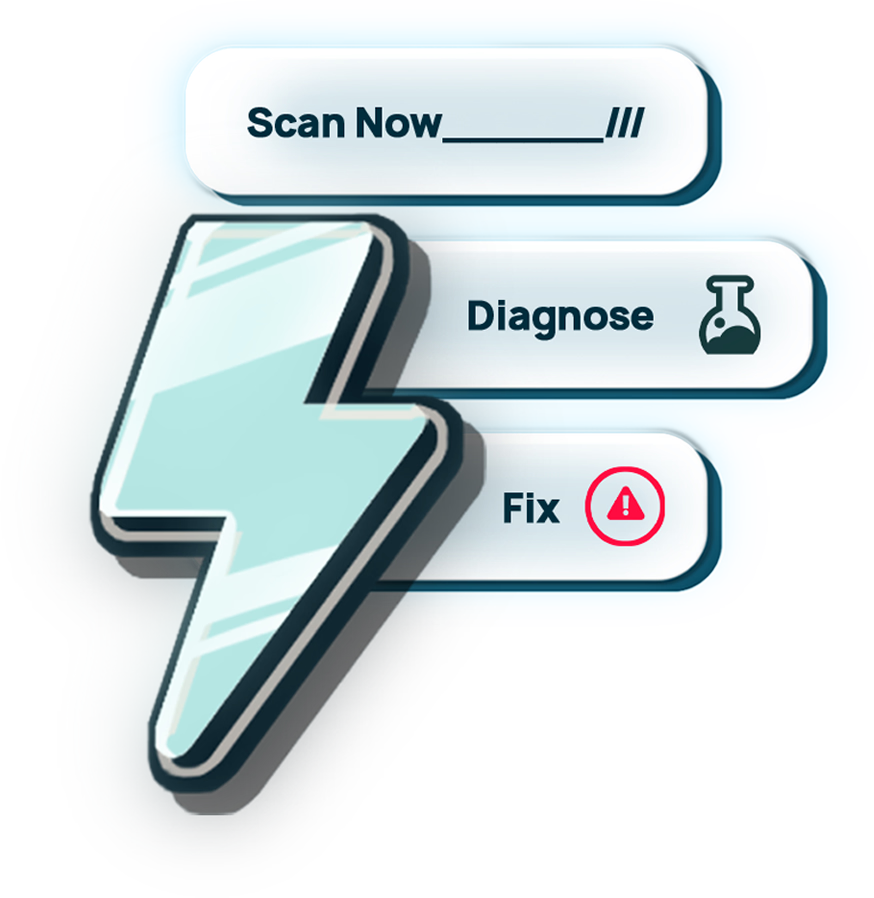
Schedule recurring website scans at flexible intervals. Proactive emerging threat scans notify you as soon as new vulnerabilities are discovered. Intruder intelligently prioritizes your results and provides remediation advice.
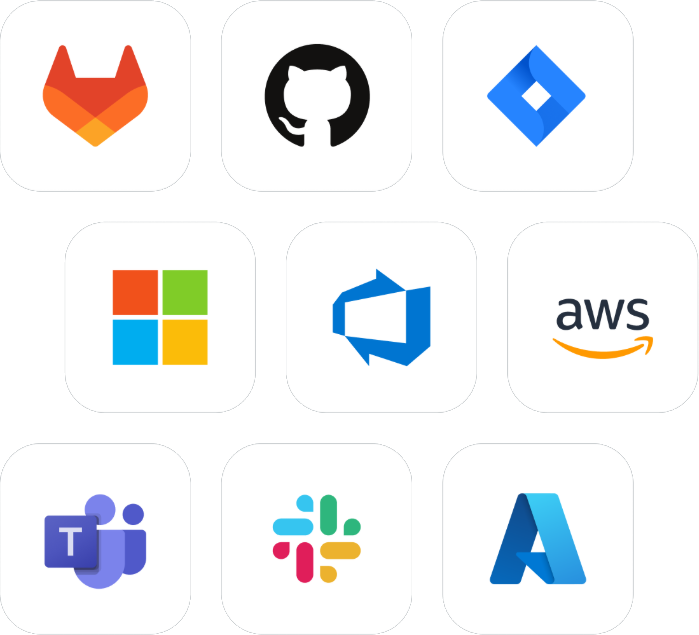
Integrate Vullify with your CI/CD pipeline to automatically find weaknesses earlier in the development lifecycle. Keep on top of important changes to your website's security with notifications via Slack, Teams, or email.
Automated scanning can help you identify most issues in your website, but manual testing helps to close any additional gaps.
With Vullify's continuous penetration testing service, our experienced penetration testers check your systems for critical vulnerabilities, including ones that are not detectable by automated scanners.

The risk-based prioritization cut our weekly ticket noise by more than half. Our engineers spend time fixing what actually matters instead of triaging dashboards.
We went from a quarterly scanning cadence to always-on coverage in a single afternoon. New assets get picked up automatically — nothing slips through the cracks.
Our auditors asked for evidence of continuous vulnerability monitoring and remediation history. Vullify's reports gave us everything we needed, formatted out of the box.
The AWS and Azure integrations surfaced forgotten subdomains and a handful of misconfigured services within the first scan. It paid for itself in one week.
The team walked us through setup, integrations, and our first scan results in under an hour. Their support responses have been fast and technically sharp ever since.
Clear risk summaries, a running fix history, and trend lines that fit on one page. Presenting security posture to our board became ten times easier.
Click to read all Vullify customer success stories
Below are common questions about continuous vulnerability scanning along with some answers and useful tips
A new CVE is created every 20 minutes, meaning your security status can quickly become outdated. Additionally, developers and IT teams frequently deploy new code or make changes daily. With attackers continuously scanning the internet for vulnerabilities, only ongoing scanning can provide timely alerts.
Keeping up with these threats is a challenge for most companies. IT managers juggle multiple responsibilities, and even well-staffed security teams are busy managing remediation efforts, generating reports, handling incidents, and advising the business. That's why Vullify delivers continuous vulnerability assessments, eliminating noise and providing only actionable security insights.
Vullify's continuous vulnerability assessment tool conducts internal and external vulnerability scanning, as well as application security testing for web apps, APIs, and SPAs. It detects over 100,000 infrastructure weaknesses and 75+ application vulnerabilities. Learn more about our security checks.
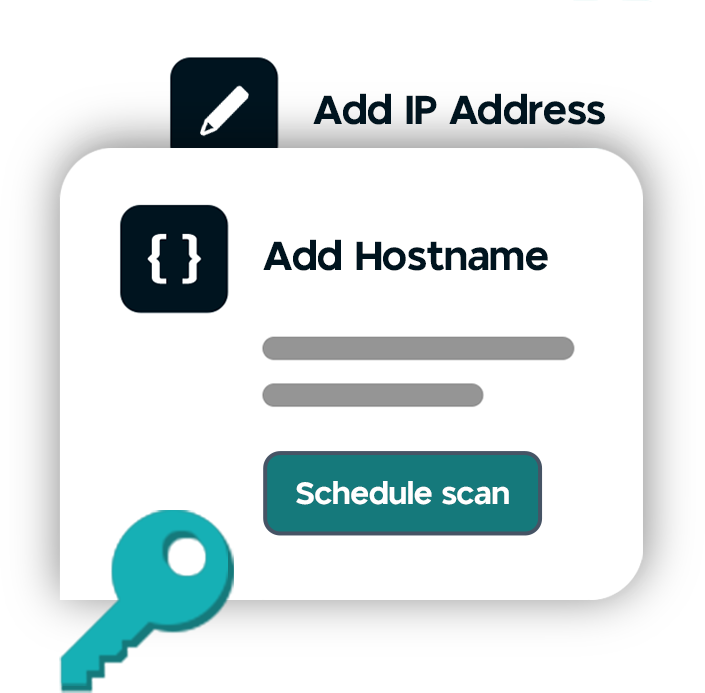
Vullify constantly monitors your network, providing peace of mind and ensuring your Attack Surface view is always up to date. When you add a target to the platform, Vullify starts the initial scan. After that, subsequent scans are automatically scheduled at regular intervals.
When you integrate Vullify with your AWS, Azure, or Google Cloud Platform accounts, it automatically adds new external IP addresses or hostnames as targets. You can configure Vullify to automatically scan these new targets as they are added and set rules to control the import process.
When a new vulnerability is found in software on your perimeter, Vullify automatically scans your systems and alerts you to the newly discovered vulnerabilities. This proactive approach is crucial for businesses that lack processes to stay updated on the latest threats and manually perform scans.
Vullify's Rapid Response is a manual process performed by our security team to identify the latest critical vulnerabilities making headlines, including those not yet covered by our scanners or those that are more effectively detected by people.
Once a threat is identified, we scan your systems and notify you if any may be impacted. We'll also provide an advisory with detailed information and recommendations.
The required scanning frequency depends on the compliance standard you're aiming for! While SOC 2 and ISO 27001 offer some flexibility, HIPAA, PCI DSS, and GDPR specify scanning intervals, ranging from quarterly to annually. However, relying solely on these standards to determine your scanning schedule may not be ideal for your business. Given the rapidly evolving security landscape, this approach could leave you more vulnerable to risks. That's why continuous scanning is the most effective way to stay secure.
Continuous vulnerability management involves identifying, prioritizing, remediating, and monitoring vulnerabilities continuously. Learn how to build an effective continuous vulnerability management program.