Find and fix vulnerabilities in web applications and underlying infrastructure. Integrate into your DevOps process. Automations and integrations to save you time.
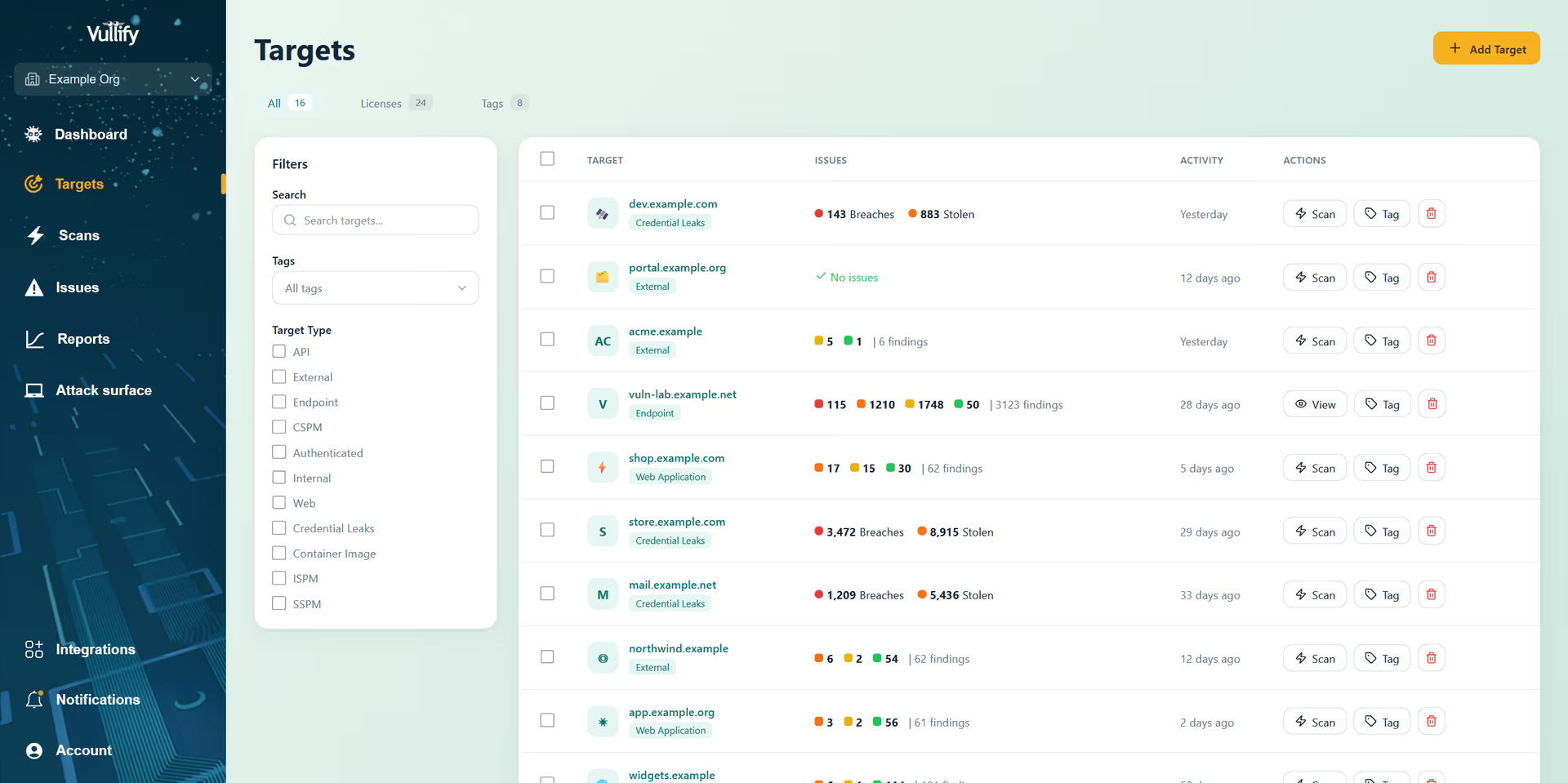
Schedule recurring scans at flexible intervals. Proactive emerging threat scans automatically check your web applications for new vulnerabilities. Vullify intelligently prioritizes your results and provides remediation advice so you can fix what matters most.
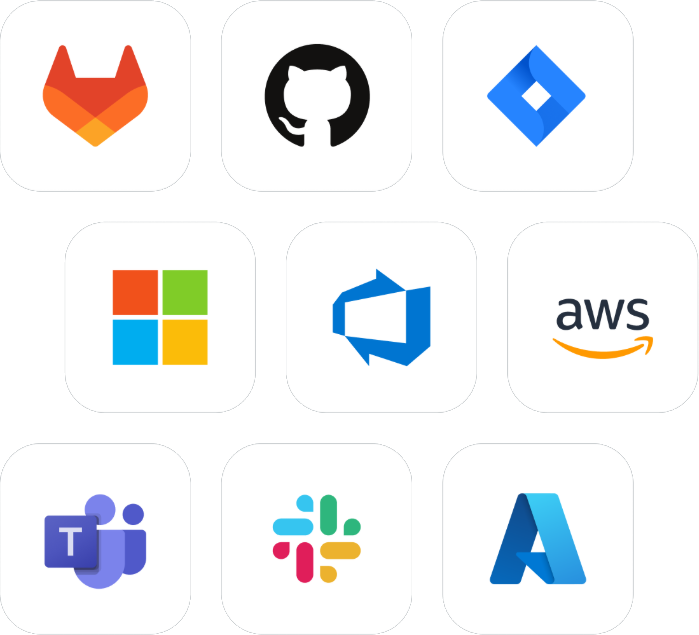
Use Vullify's API to integrate with your CI/CD pipeline and automatically find weaknesses earlier in the development lifecycle. Get notified via Teams, Slack or email when a scan is complete, a risk has been identified or new systems come online to easily stay ahead of potential weaknesses.
Automated scanning can help you identify most issues in your web apps and APIs, but manual testing helps to close any additional gaps. With Vullify's continuous penetration testing service, our experienced penetration testers check your systems for critical vulnerabilities, including ones that are not detectable by automated scanners.

The risk-based prioritization cut our weekly ticket noise by more than half. Our engineers spend time fixing what actually matters instead of triaging dashboards.
We went from a quarterly scanning cadence to always-on coverage in a single afternoon. New assets get picked up automatically — nothing slips through the cracks.
Our auditors asked for evidence of continuous vulnerability monitoring and remediation history. Vullify's reports gave us everything we needed, formatted out of the box.
The AWS and Azure integrations surfaced forgotten subdomains and a handful of misconfigured services within the first scan. It paid for itself in one week.
The team walked us through setup, integrations, and our first scan results in under an hour. Their support responses have been fast and technically sharp ever since.
Clear risk summaries, a running fix history, and trend lines that fit on one page. Presenting security posture to our board became ten times easier.
Click to read all Vullify customer success stories
Below are common questions about web application vulnerability scanning along with some answers and useful tips
Yes, you can! Vullify supports scanning of single page applications (SPAs) and modern web applications.
Web application vulnerability scanners are a specialized type of vulnerability scanner which focus on finding weaknesses in web applications and websites. Traditionally, they work by "crawling" through a site or application in a similar way as a search engine would, sending a range of probes to each page or form it finds to look for weaknesses.
We believe that continuous web app vulnerability testing is best. Continuous scanning reduces the time to find and fix vulnerabilities, delivers rich threat data and remediation advice, and minimizes your risk by prioritizing threats according to the context of your business needs. Vullify makes it easy to adopt a continuous approach.
The two services complement each other, so ideally you should do both for optimal web application security. An experienced penetration tester can find issues that are not detectable by machines, for example, by chaining several minor weaknesses together to discover a hidden critical vulnerability. On the other hand, web application vulnerability scanners can help you automate your security checks and provide continuous protection in the periods between manual in-depth tests.
Yes, Vullify checks for thousands of security weaknesses, including OWASP Top 10 vulnerabilities. However, no automated scanner can check for every OWASP vulnerability – there's where manual testing, like Vullify's continuous penetration testing service, comes in.
Authenticated web application scanning allows you to find vulnerabilities which exist behind the login pages of your applications. Each web application is different, but some of the most critical functionality in an application exists behind a login page, such as the ability to add data to your account, edit data, delete data, upload files, interact with other users. As a result, a large percentage of the attack surface of an application can exist behind a login page.
Yes! You can upload your OpenAPI/Swagger API schema to scan your APIs. Learn more about our API scanner.
AppSec is short for application security. It refers to the ongoing process of finding, fixing, and preventing security vulnerabilities in applications, such as carrying out continuous vulnerability scanning.